


Skip to content
An announcement goes here
  • Case Managers / DOE
  • Careers
  • Patient Services
  • Patient Portal

Main Navigation

Floating Hospital
  • Get Involved

    For 160 years, compassionate individuals have found camaraderie and shared purpose in empowering New York City’s most vulnerable families through donations, volunteering, gifts in kind, board service, and more. Knowing you made a difference in a family’s life is its own priceless gift.

    Ways to Join Us
    • Become a Volunteer
    • Visit the Clinic
    • Become a Partner
    Help Today
    • Donate Goods
    • Join Tugboat Society
    • More Ways to Give
  • Programs

    Our medical and relief programs provide immediate care for families fleeing domestic violence or facing homelessness, helping them heal and find stability in times of crisis. Our health education programs teach self-care, wellness, and life skills that empower families to move forward and break cycles of poverty and abuse.

    Relief Programs
    • Clothing, Food & NecessitiesEssentials for those who have lost everything
    • Candy Cane LaneWhere holiday dreams come true
    • Good Health ShuttleA driving force in healthcare
    • Literacy InitiativesReading is fundamental
    Education Programs
    • Health EducationWhen the question is health, we have the answer
    • The Health Education ClassroomsThe heart of our waiting room
    • Teaching KitchenLearning that tastes good
    • Our Summer ExperiencesAn adventure in self-discovery
    • Internship ProgramA first step on a productive path
    Healthcare Programs
    • Family MedicinePrimary care to keep families healthy
    • Behavioral HealthA safe space for healing
    • DentistryBuilding confidence in every smile
    • PodiatryHappy feet for a better life
    • OptometryClear sight is the focus
    • Women's WellnessWhere relief partners with healthcare
  • 21,296
    Patients Served

    Impact

    The Floating Hospital meets families where they are: in safe houses, shelters, or doubled up with family and friends. We provide door-to-door transportation to compassionate healthcare, relief, and educational support for children and caregivers.

    Impact at a Glance
    Featured Patient Story
    Moving forward: Ashley’s Story

    Moving forward: Ashley’s Story

    After fleeing violence in another state, Ashley made a new life for her family back home in the city

    READ STORY
    Featured Patient Story
    Back on track: Crystal’s Story

    Back on track: Crystal’s Story

    She was looking for doctors, and found guidance for her sons

    READ STORY
    Patient StoriesRead their stories
  • Who We Are

    Since 1866, The Floating Hospital has welcomed New York City families in need aboard our ships and into our clinics. We provide food, relief supplies, health education, and life skills to help families overcome homelessness, while providing compassionate, high-quality healthcare regardless of ability to pay.

    About Us
    • Our Story
    • Our Supporters
    • Financials
    • Contact Us
    News & Media
    • News
    • Newsletter
    Featured Story
    Teen camp experience

    Teen camp experience

    At Camp Rise Up, teens build confidence while learning about their emotional and physical development and gaining practical skills designed to keep them in school and achieve employment. Keemoko said the health education classes helped him deal with peer pressure. “I’ve learned a lot of things there that make me feel different and more grown up.”

    READ STORY
Donate Donate
Floating Hospital

Search Our Site

Find newsletters, patient stories, programs, and everything else across our site.

Our Latest Newsletters

Meet This Year’s Waverunners For a third year, the Floating Hospital is an official charity partner of the TCS New York City Marathon. This… Read Story News + Events/September 15, 2026 Camp Rise Up: Wet weather didn’t dampen spirits | Embracing financial literacy and retirement | Women’s Wellness: Self-care for sweater… Read Story

No results found. Try a different search.

TB’s New Urgency in New York

August 27, 2025

Written By The Floating Hospital

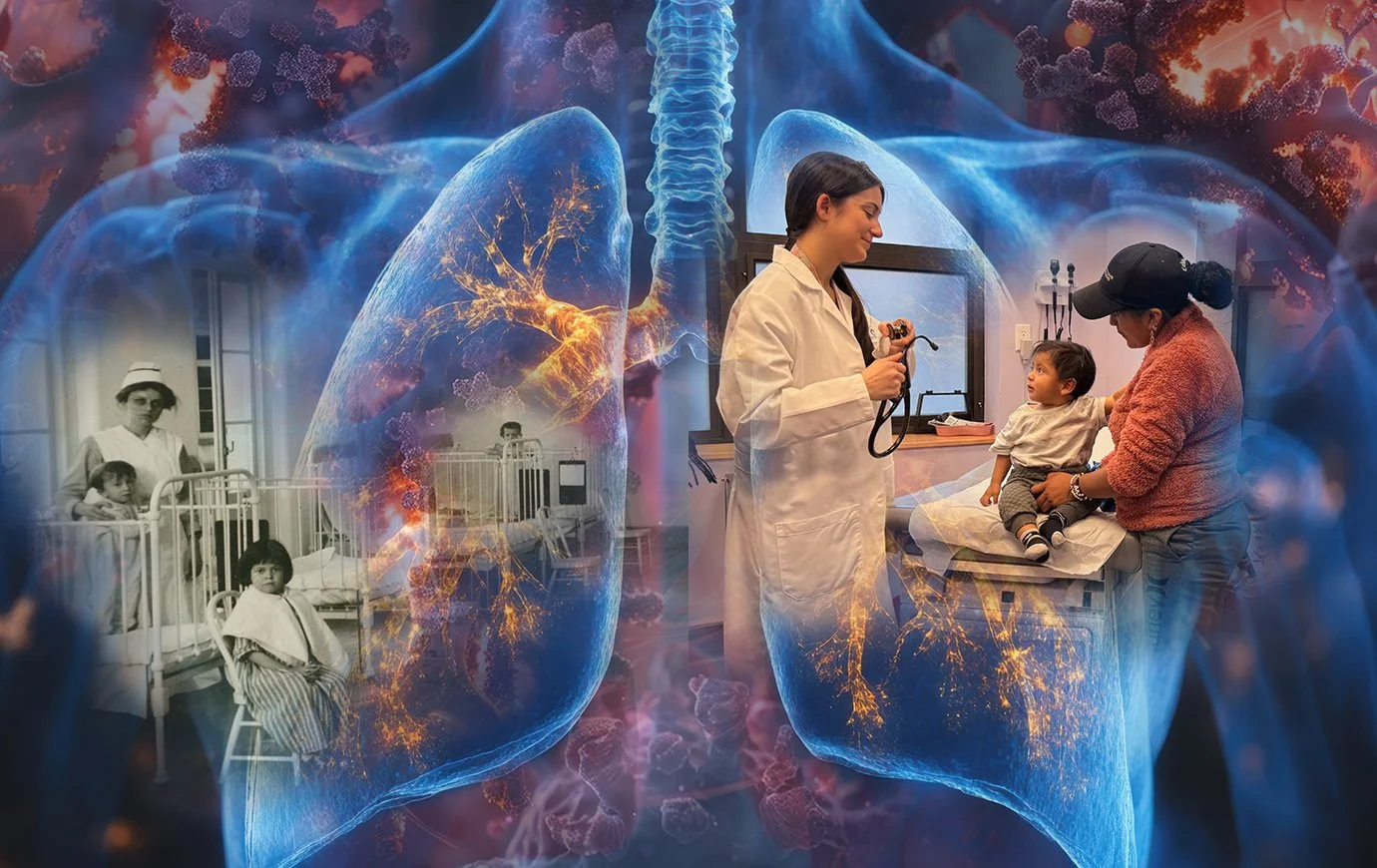
In a scene familiar from numerous historical works of fiction, a once healthy girl or woman takes to bed, clammy from fever and frail from a racking cough. She rarely survives the next chapter.

Up through the late 19th century, this condition was called “consumption” for the way it consumed the body, causing it to become thinner and weaker. As science advanced and the bacteria that cause it were identified, the disease took on a new name, tuberculosis.

For decades after, TB remained a leading cause of death in the United States. We largely reduced TB domestically in the latter half of the last century, but it remains the world’s deadliest infectious disease, killing more than a million people every year globally.

Today, TB continues to be the subject of books (see John Green’s Everything Is Tuberculosis for an in depth examination of the disease and what systemic issues drive its spread), articles, podcasts, and renewed clinical concern. From a public health perspective, the question is: what does this mean for New York City?

Like other large U.S. cities, New York draws travelers and residents from around the world. Along with their luggage, some carry latent TB infection, a silent form that can persist for years and later develop into an active, contagious disease. Only those with active TB of the lungs or larynx transmit TB, typically by coughing, sneezing, speaking or singing, while most people with TB have latent infection and no symptoms.
Dr. Seung H. Kang, an infectious disease specialist in our clinic, said, “Tuberculosis can remain silent for years and, when it declares itself, it can look like many different illnesses. Public awareness of classic symptoms such as fever, a persistent cough, night sweats, and weight loss is crucial.* But even more important is for clinicians to keep a low threshold for testing and to start treatment promptly when indicated.”

Active TB is preventable and curable with antibiotics, but delays in recognition and treatment can fuel transmission. The City and CDC recommend short-course regimens for latent TB infection (for example, four months of rifampin or 12 weeks of once weekly isoniazid plus rifapentine) because they are quicker and better tolerated, improving completion rates. Active TB requires multidrug therapy for a longer period of time, with careful management to prevent resistance.

After a spike during the height of the HIV/AIDS epidemic, when immune suppression made infection and progression more likely, New York City enjoyed relatively low TB rates for years. That trend has now reversed. In 2024, the city confirmed 839 TB cases, a 24 percent increase from 2023 and roughly a 57 percent rise from 2022. The majority of 2024 cases were in men, younger adults and people not born in the U.S. The city documented 13 multidrug resistant TB cases in 2024.

The data also reveals that TB in New York is concentrated among the underinsured and uninsured and in communities living with housing instability and crowded conditions, which delay diagnosis and complicate treatment. “We need a strong referral network so uninsured or underinsured patients are not left waiting,” Kang said.

In the 1980s, the city operated 24 public clinics that provided TB care. By 1988, that number had already fallen to eight as resources declined. Kang said that current city TB services have been consolidated into four Health Department Chest Centers located in the Bronx, Brooklyn, Manhattan, and Queens. Temporary closures and reduced hours, such as the current suspension of services at the Corona and Washington Heights sites with a temporary Riverside site operating, have further tightened access. Reports indicate that while many patients are seen within a few days, some wait over a week for evaluation, especially when coverage and referrals are complex.
Such a delay “is unacceptable for a contagious airborne disease,” Kang said. When combined with declines in TB research funding and the clinic closures, the upward trend in TB cases becomes even more concerning. “The public should understand how deadly TB can be, not to cause alarm, but to ensure policymakers feel sustained pressure to fund TB prevention, diagnosis, treatment and the clinical capacity required to deliver them.”

According to Kang, “global TB control faces a worrisome headwind.” In March 2025, the World Health Organization and UN News warned that major U.S. funding cuts (the U.S. has historically contributed $200 to $250 million annually to global TB efforts) are disrupting treatment, screening, and research across at least 18 high burden countries. “These cuts risk hard won progress and could increase transmission everywhere, including here.”

*More information on the signs and symptoms of TB as well as fact sheets and other resources are on the Centers For Disease Control website.


Uncategorized
Prev All Newsletters Next

Related Articles

9.15.26 Uncategorized

Meet This Year’s Waverunners

For a third year, the Floating Hospital is an official charity partner of the TCS New York City Marathon. This year, our Waverunners team…

9.15.26 Uncategorized

News + Events/September 15, 2026

Camp Rise Up: Wet weather didn’t dampen spirits | Embracing financial literacy and retirement | Women’s Wellness: Self-care for sweater weather | Halloween request

9.15.26 Uncategorized

Soup in Seven Languages

Soup in Seven Languages: The dining room onboard the Floating Hospital was not an easy place to work in. Read how a teacher brought…

8.14.26 Uncategorized

Nicholas Tropnas Helped Families in Need—You Can Too 

He was a brother, an uncle, a son of Brooklyn. And to family, friends, coworkers, and the many children he inspired, Nicholas Tropnas was…

Donate

Sign up for our newsletter and discover how 160 years of care continues.

Visit Us

21-01 41st Avenue
Long Island City, NY 11101

Contact Us

718-784-2240

Contact us

Legal

  • Privacy Policy
  • Terms of Use
  • Accessibility Statement
  • Donor Privacy Policy 

© 2026 The Floating Hospital

The Floating Hospital and The Floating Hospital Foundation are tax-exempt 501(c)3 not-for-profit organizations. All donations are fully tax-deductible to the extent allowable by law.

  • Candid Transparency Seal
  • HCP
  • Charity