Skip to content
An announcement goes here
  • Case Managers / DOE
  • Careers
  • Patient Services
  • Patient Portal

Main Navigation

Floating Hospital
  • Get Involved

    For 160 years, compassionate individuals have found camaraderie and shared purpose in empowering New York City’s most vulnerable families through donations, volunteering, gifts in kind, board service, and more. Knowing you made a difference in a family’s life is its own priceless gift.

    Ways to Join Us
    • Become a Volunteer
    • Visit the Clinic
    • Become a Partner
    Help Today
    • Donate Goods
    • Join Tugboat Society
    • More Ways to Give
  • Programs

    Our medical and relief programs provide immediate care for families fleeing domestic violence or facing homelessness, helping them heal and find stability in times of crisis. Our health education programs teach self-care, wellness, and life skills that empower families to move forward and break cycles of poverty and abuse.

    Relief Programs
    • Clothing, Food & NecessitiesEssentials for those who have lost everything
    • Candy Cane LaneWhere holiday dreams come true
    • Good Health ShuttleA driving force in healthcare
    • Literacy InitiativesReading is fundamental
    Education Programs
    • Health EducationWhen the question is health, we have the answer
    • The Health Education ClassroomsThe heart of our waiting room
    • Teaching KitchenLearning that tastes good
    • Our Summer ExperiencesAn adventure in self-discovery
    • Internship ProgramA first step on a productive path
    Healthcare Programs
    • Family MedicinePrimary care to keep families healthy
    • Behavioral HealthA safe space for healing
    • DentistryBuilding confidence in every smile
    • PodiatryHappy feet for a better life
    • OptometryClear sight is the focus
    • Women's WellnessWhere relief partners with healthcare
  • 21,296
    Patients Served

    Impact

    The Floating Hospital meets families where they are: in safe houses, shelters, or doubled up with family and friends. We provide door-to-door transportation to compassionate healthcare, relief, and educational support for children and caregivers.

    Impact at a Glance
    Featured Patient Story
    Moving forward: Ashley’s Story

    Moving forward: Ashley’s Story

    After fleeing violence in another state, Ashley made a new life for her family back home in the city

    READ STORY
    Featured Patient Story
    Back on track: Crystal’s Story

    Back on track: Crystal’s Story

    She was looking for doctors, and found guidance for her sons

    READ STORY
    Patient StoriesRead their stories
  • Who We Are

    Since 1866, The Floating Hospital has welcomed New York City families in need aboard our ships and into our clinics. We provide food, relief supplies, health education, and life skills to help families overcome homelessness, while providing compassionate, high-quality healthcare regardless of ability to pay.

    About Us
    • Our Story
    • Our Supporters
    • Financials
    • Contact Us
    News & Media
    • News
    • Newsletter
    Featured Story
    Teen camp experience

    Teen camp experience

    At Camp Rise Up, teens build confidence while learning about their emotional and physical development and gaining practical skills designed to keep them in school and achieve employment. Keemoko said the health education classes helped him deal with peer pressure. “I’ve learned a lot of things there that make me feel different and more grown up.”

    READ STORY
Donate Donate
Floating Hospital

Search Our Site

Find newsletters, patient stories, programs, and everything else across our site.

Our Latest Newsletters

Meet This Year’s Waverunners For a third year, the Floating Hospital is an official charity partner of the TCS New York City Marathon. This… Read Story News + Events/September 15, 2026 Camp Rise Up: Wet weather didn’t dampen spirits | Embracing financial literacy and retirement | Women’s Wellness: Self-care for sweater… Read Story

No results found. Try a different search.

History in the Making

March 24, 2025

Written By The Floating Hospital

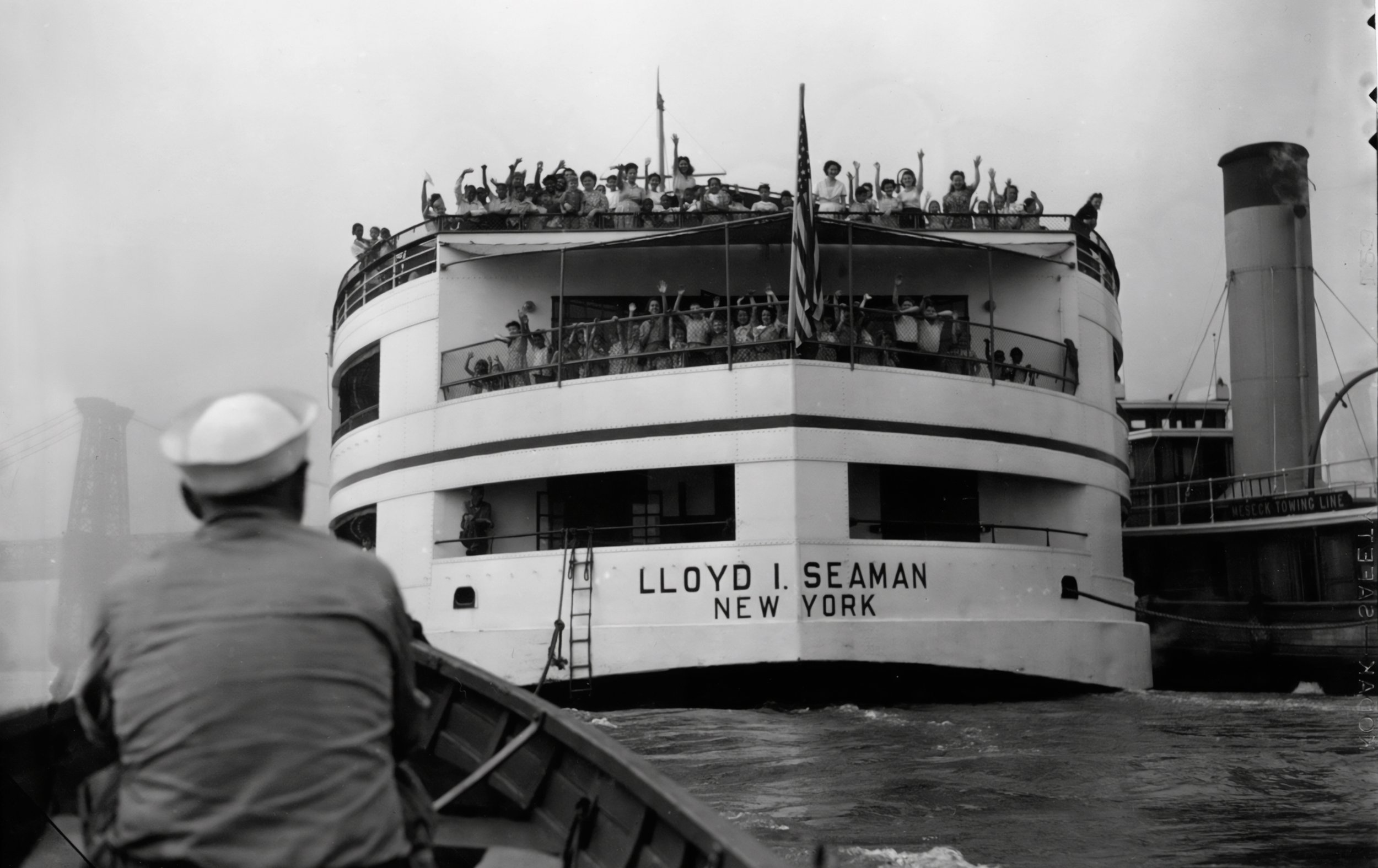
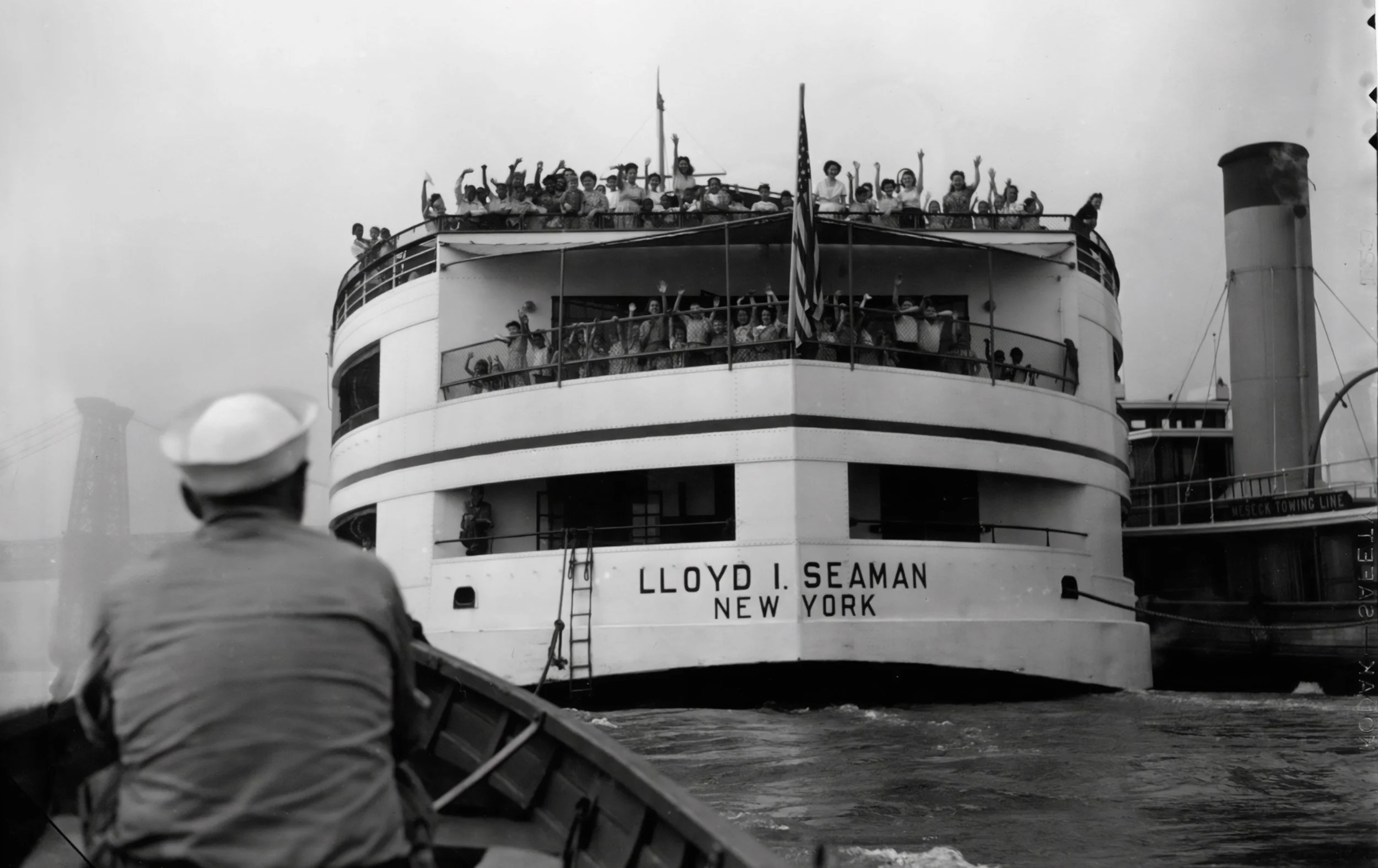
  “In the past  six years, Gus Jensen, 57, has made 300 trips in a towed rowboat, prepared to rescue any children who fall overboard,” The Brooklyn Citizen, August 2, 1946.
“In the past six years, Gus Jensen, 57, has made 300 trips in a towed rowboat, prepared to rescue any children who fall overboard,” The Brooklyn Citizen, August 2, 1946.

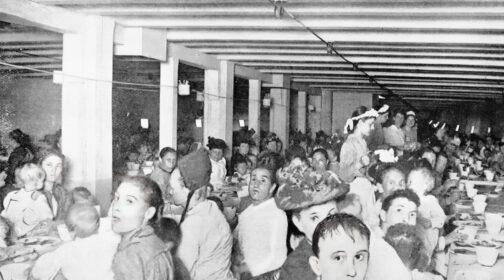
One consequence of being an organization more than a century-and-a-half old is a large accumulation of records and documents—including archival photos and letters from dignitaries like Ronald Reagan and Hillary Clinton—with a responsibility to preserve and maintain them.

Many have taken on the task, only to be pulled away by more urgent concerns. Barbara LaPlaca, vice president of communications, was drawn to The Floating Hospital not only by its mission, but its rich history. In order to preserve the materials and increase their accessibility, she began scanning some of the archive’s contents, including photos.

When Charles Crofton joined her team as a designer, she said his research skills and ability to sense the stories behind the old photographs led her to put him in charge of them and our archival Instagram feed. For him, the research on the archive has become a full avocation and, possibly, even an obsession.

When he began the Instagram account, he realized the images often lacked interest and meaning without any background about their subject matter. “I started to do a bit of research, trying to figure out what was what.” He signed up for a newspapers.com account and “that was the first big breakthrough, because if we had an image from 1910, I could go and find that image in a 1910 newspaper.” It also helped with accurate dating and identification of the subjects in the photos.
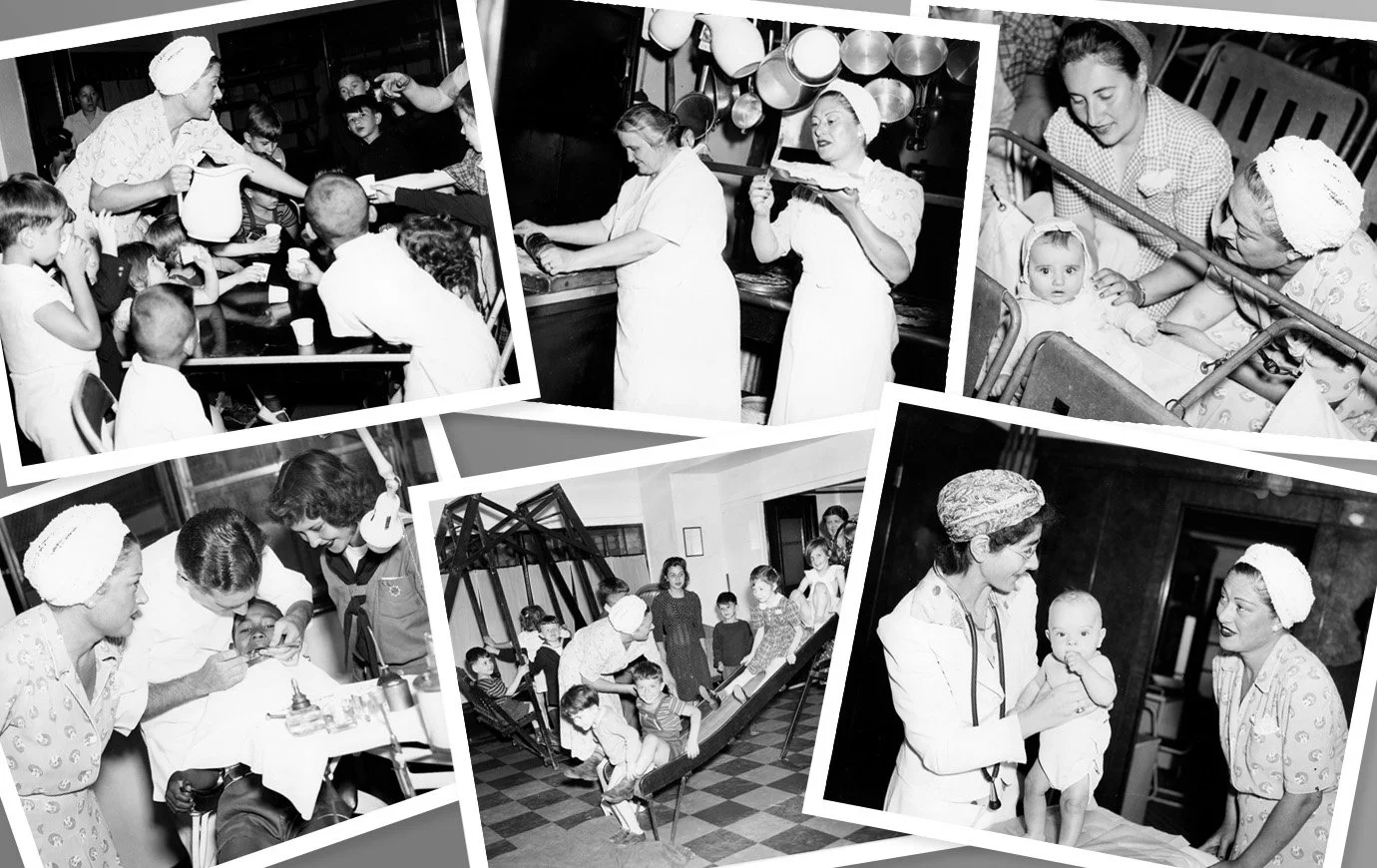
  Margaret MacDonald visited the ship, photographer in tow, July 30, 1941. She played the title role in “Kate Hopkins, Angel of Mercy,” a CBS radio soap opera broadcast weekday afternoons 1940 until 1942.
Margaret MacDonald visited the ship, photographer in tow, July 30, 1941. She played the title role in “Kate Hopkins, Angel of Mercy,” a CBS radio soap opera broadcast weekday afternoons 1940 until 1942.

As he looked deeper, he started to unravel some of the mysteries the photos contained. He discovered the name of a CBS radio star of the day, Margaret MacDonald, who visited the ship in 1941. “Likewise, we have an image of a sailor in a row boat looking up at the ship (see top image). The title we had for the image, ‘Captain looking at The Lloyd from rowboat_1940s,’ seemed off to me because a captain is very unlikely to be in a row boat while on duty.” His research discovered the photo in the The Brooklyn Citizen, August 2, 1946 and the sailor was Gus Jensen, one of the ship’s crew assigned to ride in the rowboat tethered to it in case any of the children fell overboard. (Fortunately, that rarely happened.) “I love it when we learn the names of those guys,” Crofton said.
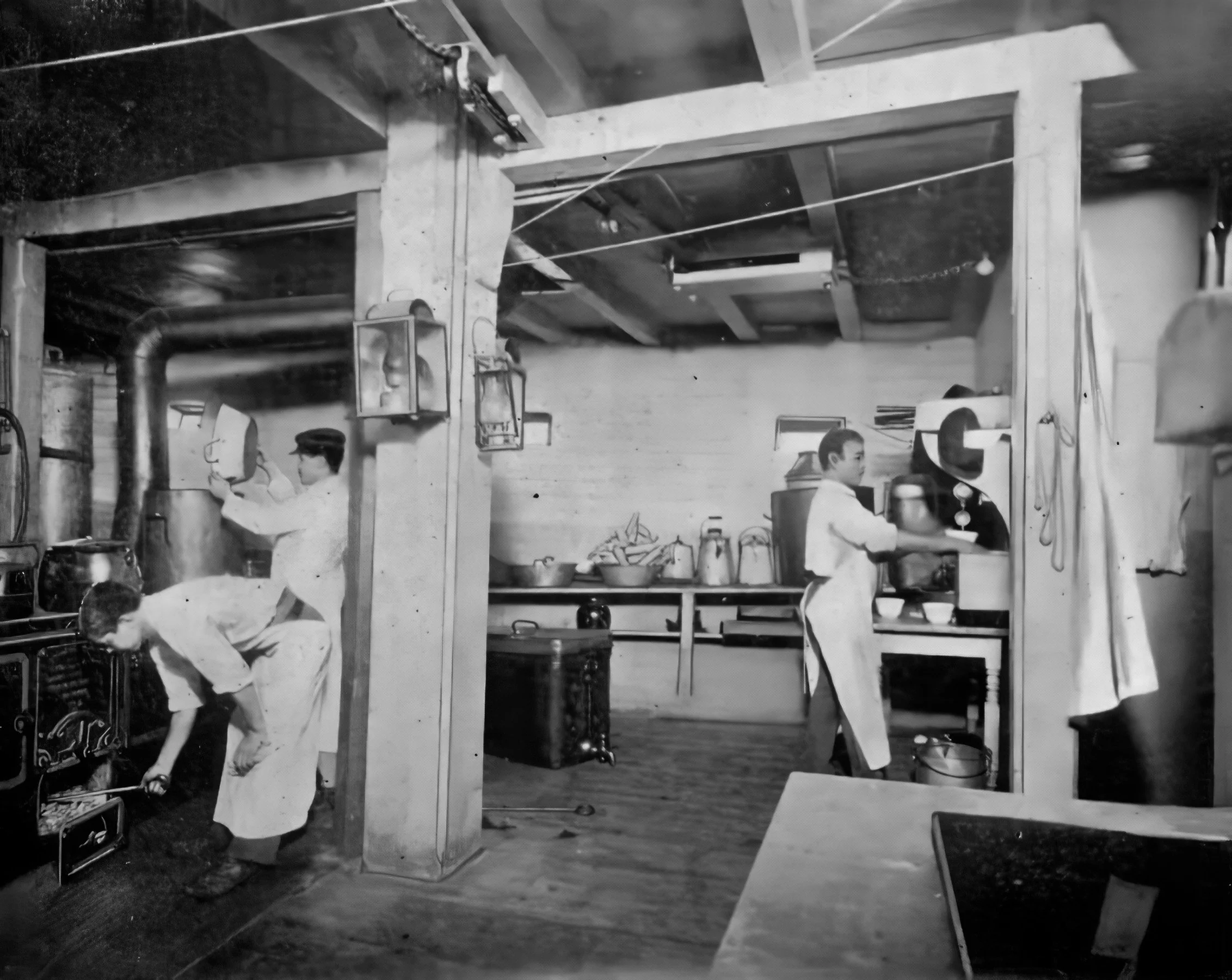
  Toyohiko Takami as head of the kitchen staff while a college student. Photo from our 1896 annual report.
Toyohiko Takami as head of the kitchen staff while a college student. Photo from our 1896 annual report.

He recently traced the history of Dr. Toyohiko Campbell Takami, the first Japanese person to earn a medical license in the United States after graduating from Cornell Medical School in 1906. While a student, he worked as a cook aboard The Floating Hospital for seven summers. The practice he started in Brooklyn treated poor workers and Japanese residents, and he was the founder of what became the Japanese American Association of New York. A New York Times article that mentioned him by name, was a major clue to help discover a wealth of information online. We shared it on our Instagram archive account that April, but most of what we now know came from the doctor’s hard to find autobiography, which Crofton finally found online after a long search. Thanks to the Instagram channel, he has also been in communication with Dr. Takami’s grandson and great grandson.

Historical newspapers have been a font of information. “The newspapers were especially good at covering The Floating Hospital because we were invariably the ‘feel-good’ story. We always pop up in them around about July 4, which is when the season opened, and then throughout July and August, into the beginning of September. So you go through the newspapers looking for clues or interesting stories.” Often the articles are illustrated with images that ended up in our archive, but many are completely new to us.
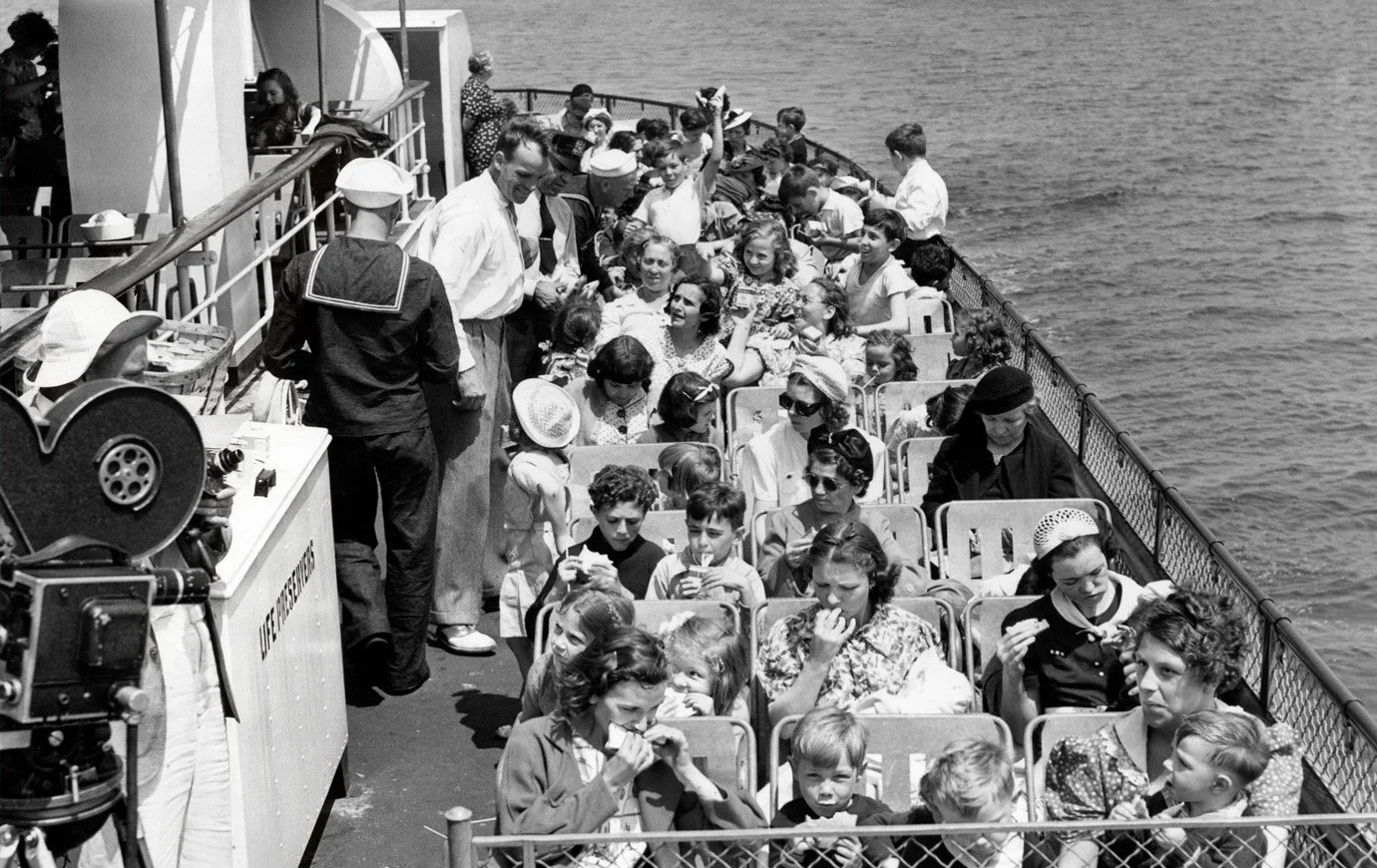
  “Supplied with milk and sandwiches, mothers and children eat under the sun on the deck of the Floating Hospital. Besides enjoying the fresh breezes of the harbor, the one day tourists were treated to an entertainment program headed by Ireene Wicker*, the “Singing Lady” of radio.” The Pittsburgh Press, July 23, 1939.
“Supplied with milk and sandwiches, mothers and children eat under the sun on the deck of the Floating Hospital. Besides enjoying the fresh breezes of the harbor, the one day tourists were treated to an entertainment program headed by Ireene Wicker*, the “Singing Lady” of radio.” The Pittsburgh Press, July 23, 1939.

One photograph taken on the ship in 1939 has a movie camera in the background. Crofton found footage on YouTube from that year taken by British Pathé, a newsreel producer. “About 60 seconds in, you see where the camera would have been filming. It never made it into a finished newsreel, because the very next month, Britain declared war on Germany, and a film like that just wasn’t relevant anymore.”

He’s not the only one intrigued by our past and the material it has produced. Fionn Quigley, who joined us last September, has also become intrigued by our history and the papers and objects it has left behind. He has been organizing boxes of material, when time allows, and has become enthralled with the contents and what potential treasures lie within.

Both say it’s no accident they are intrigued by the archive and all that it represents. “The thing we have in common is we’re both from Ireland,” Crofton said. “And the Irish have a really big love for history,” As a child, he lived in England, where history was English-centric and “very pedestrian, lame really.” When he moved to Ireland, he was 15 and he found the Irish “very much in tune with history and open to what happens around the greater world,” including news and current events. “When you start digging, you read why things are the way they are, and everything starts to make sense.”

Although we value these remnants of our past, we’ve never been able to dedicate someone solely to the archive. Various staff members have worked with it, including Crofton, but something more urgent always takes precedence. Since Quigley started, he has been trying to get the 60 or so boxes of materials catalogued in some fashion. “They’re just filled with things, but there’s not really any organization to it,” he said.

A recent graduate, Quigley wrote his dissertation “on a pretty niche topic, the history of public toilets in Dublin. I was doing completely primary research, the first person to look at a lot of documents. It was pretty hard to find stuff, but it was fun and very rewarding,” he said.

As for the archive, “I don’t know what’s all in there, but that kind of excites me.” The challenge is figuring out how to put it in order, along with finding time to do it in an already crammed schedule. “When I get a chance, the main thing I’m doing is taking out a box, looking through it, organizing it vaguely, and putting a label on it describing what’s in there.” Once he’s explored every box in that fashion, more fine tuning can begin.

So far, he has primarily seen photos, “really gorgeous” negatives, the letter from Reagan when he was president (which offers its own questions yet to be answered) as well as the thank-you note from Clinton, when she was a U.S. senator, to the hospital president.

“I’ve worked with a lot of primary sources, and a lot of it is very mundane and doesn’t really matter,” Quigley said. “But every so often, someone comes along and wants to look at this stuff, and you never know how useful it will be.”

*She added the second ‘e’ in her first name on the advice of an astrologer.
Uncategorized
Prev All Newsletters Next

Related Articles

9.15.26 Uncategorized

Meet This Year’s Waverunners

For a third year, the Floating Hospital is an official charity partner of the TCS New York City Marathon. This year, our Waverunners team…

9.15.26 Uncategorized

News + Events/September 15, 2026

Camp Rise Up: Wet weather didn’t dampen spirits | Embracing financial literacy and retirement | Women’s Wellness: Self-care for sweater weather | Halloween request

9.15.26 Uncategorized

Soup in Seven Languages

Soup in Seven Languages: The dining room onboard the Floating Hospital was not an easy place to work in. Read how a teacher brought…

8.14.26 Uncategorized

Nicholas Tropnas Helped Families in Need—You Can Too 

He was a brother, an uncle, a son of Brooklyn. And to family, friends, coworkers, and the many children he inspired, Nicholas Tropnas was…

Donate

Sign up for our newsletter and discover how 160 years of care continues.

Visit Us

21-01 41st Avenue
Long Island City, NY 11101

Contact Us

718-784-2240

Contact us

Legal

  • Privacy Policy
  • Terms of Use
  • Accessibility Statement
  • Donor Privacy Policy 

© 2026 The Floating Hospital

The Floating Hospital and The Floating Hospital Foundation are tax-exempt 501(c)3 not-for-profit organizations. All donations are fully tax-deductible to the extent allowable by law.

  • Candid Transparency Seal
  • HCP
  • Charity