October is Domestic Violence Awareness Month and while our supporters are aware of the impact of domestic violence on many of our patients’ lives, there is still so much to learn about its prevalence and its repercussions, both across the nation and within our own city.
In New York, families flee to safe houses with nothing but fear and the clothes on their backs on a nightly basis. Domestic violence has become one of the leading causes of family homelessness in the U.S. and the number one cause in our city, leaving survivors vulnerable to not only physical danger but also financial instability and emotional trauma.
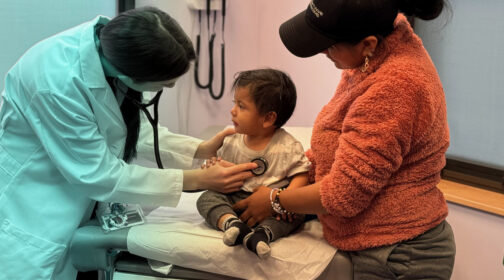
As the only healthcare provider serving every domestic violence safe house in all five boroughs, The Floating Hospital’s medical and behavioral health providers see trauma’s fallout regularly in the adults and children they treat.

Understanding the patient
Dr. Danielle Dickson, a specialist in family medicine in our main clinic, said that she has seen two patterns emerge in the patients where domestic violence has been revealed to be a factor. “They tend not to take care of their own medical needs, staying on top of taking medication or following up with referrals, just due to making sure their kids are alright.” Although it’s natural for parents to focus their energies on their children’s well-being, it is often at their own expense.
On the other hand, some patients can channel the stress and anxiety of their situation by becoming “hyper-focused on physical symptoms,” she said. They might have frequent headaches or a mole then worry they have cancer, “and a lot of times, it’s more centered on the stress.” She added it’s important to “de-escalate the feelings in what they’re going through,” take the time to listen, and then go deeper to find out what is happening in their bodies and their minds.
In our behavioral health department, multiple clinicians have noticed an uptick in women and families fleeing abusive households in other states. “Some previously lived in New York and are moving back, but many are coming for the first time,” according to
Dr. Jonathan Zimmerman, the department’s director. They come after “hearing about better support and resources for victims of domestic violence available here than in their home state.” It compounds their distress “by having to recover from the trauma of domestic violence on top of having to learn to navigate a new city they often have little knowledge of or connection to. This can add to their sense of fear and loneliness.”
Then there are those fleeing violence in other countries. “The sense of isolation and culture shock is especially pronounced in our new immigrant population, many of whom are escaping violence only to be subject to violence over the course of their journey,” he said. “They are therefore recovering from multiple complex traumas while also struggling to adjust to a different and often unfamiliar culture, language and city.”

New triggers, concerns
Other complicating factors include the shelter system itself. Both the medical and behavioral providers noted that the domestic violence shelters “can cause their own problems…. Some shelters are very supportive and provide useful resources, while others can be strict and intrusive and reinforce the dynamics of power and control they are escaping,” Zimmerman said.
Dickson reported seeing instances in her patients where “the way that they’re treated in the shelter triggers them, reminding them how they were treated back with the perpetrator.” In the shelter “they’re constantly being told, ‘you need to do this or that.’ They’re trying to look for a job, but then they get calls telling them to come back in to the shelter and fill out paperwork or even get discharged. It’s a different type of abuse that they feel.” And, “they can’t scream and yell, or run away, because it’s the only place they can live.”
Then, there is the real worry that the abuser will find them. “They get threats from the abuser… Sometimes, if they can’t reach the partner, the abuser will try to reach the child.” She has seen children depressed or who hurt themselves as a result of these dynamics.
Zimmerman said that other issues include a tendency not to recognize non-physical abuse. This might include financial abuse, intimidating or controlling behavior, sexual pressuring or coercion and verbal abuse. “Patients often won’t identify this when asked about a history of abuse and, when it comes out later, are sometimes surprised when it is identified as abuse.” He noted that even those who have escaped abuse may not recognize those patterns again, and “often have multiple violent relationships over the course of their lives.”

Providing support, breaking patterns
Family and friends will frequently choose a “tough love” approach to the situation, encouraging the patient to “just leave.” This does not acknowledge the factors that make it difficult to do so, Zimmerman said. The patient’s providers and loved ones should not be insensitive or communicate frustration. This “can give the impression that they feel the patient is not working hard enough to get out of the situation, which can make the patient feel more depressed as they can internalize this sense of guilt and shame around not leaving.”
He said “it’s important as therapists to approach all patients in this situation in a supportive, non-judgmental way that validates their real struggles and challenges that can stand in the way of getting free of a domestic violence situation, help to coordinate any available resources to overcome these obstacles, and set up a safe and therapeutic environment to explore and resolve the psychological conflicts that are complicating the situation.”
Dickson said patient care for domestic violence victims can be “like a therapy session where I’m not even doing medical care. They just need someone to listen to them” after “a long time with no one listening to them.” During initial visits when they’re running tests and then going over the results, she said it feels like she’s providing treatment by just “letting them express what’s going on. I don’t need to provide medication or anything. I just need to be there.”
Zimmerman said “using psychotherapy as a support and empowering tool helps the patient take agency over their lives and decisions.” In addition, our mental health clinicians “provide hope and relief that there is help for them, and that others have been through similar situations and gotten through them.” They share tools and guides to help them recognize patterns of violence and abuse in order to better identify them in the moment and avoid them in the future.
By the end of this year, more than 25,000 family members in safe houses and shelters will rely on our free shuttles to reach our clinics for vital care. For years, this care has included the resources and support they require to rebuild their lives. Our aim is to help them break free from cycles of violence and poverty that have kept them captive, often for all of their existence. The Floating Hospital has been offering “more than healthcare” from its beginning. For these survivors, it means giving them hope, dignity and a path to reclaim their futures.