When our new clinic opened in 2021, it took center stage in our model of patient care. Our bright and cheerful waiting areas and exam rooms along with a teaching kitchen and classroom for kids and adults have reassured and even delighted patients, many of whom are experiencing the most difficult challenges of their lives. But what remained constant through the transition to our new home base was our network of smaller clinics located in shelters and other places serving the homeless families and the larger community.
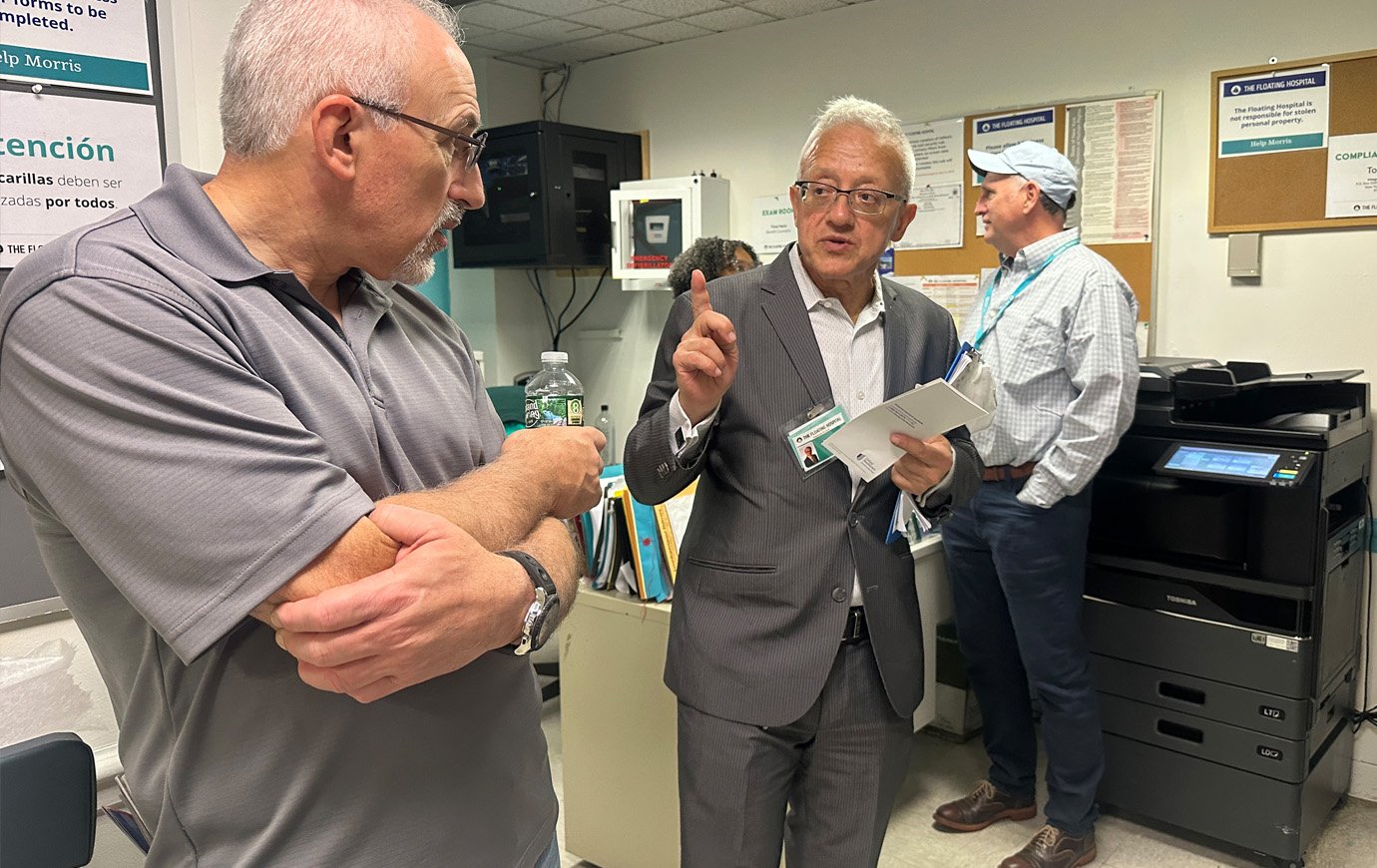
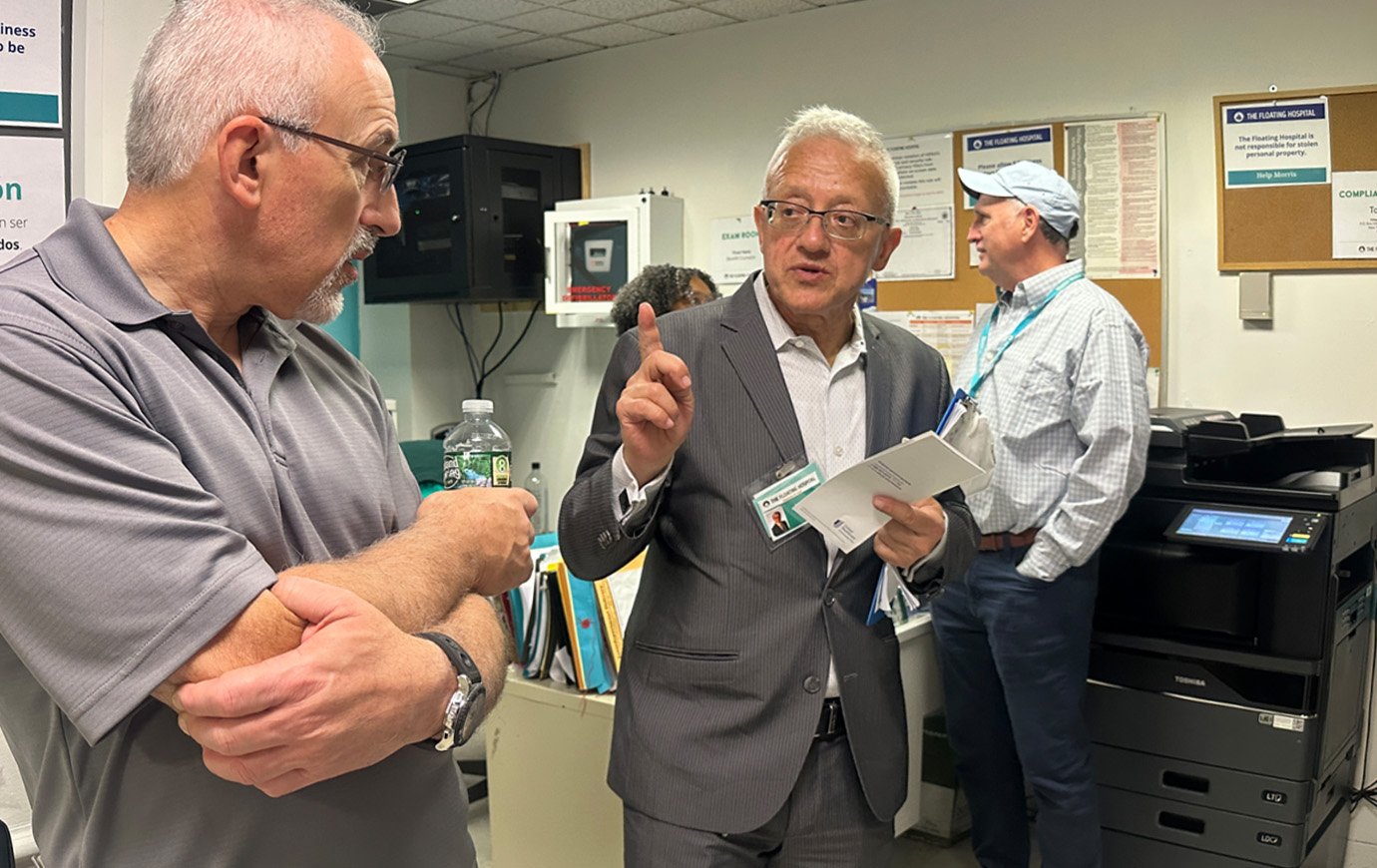
As the director of The Floating Hospital’s families in temporary housing department, Ivan Romero is the primary liaison between our operations and the staff and residents of the family shelters and safe houses we serve, as well as the five clinics we operate offsite. In this role, he is a goodwill ambassador to everyone he encounters. He and Hospital President Sean Granahan both believe that to understand our operations it is essential to see our reach and range of services. In September, they took some board members and staff to visit our two clinics in the Bronx for a peek behind the scenes at two very busy locations. Some participants had been on offsite tours previously, others for the first time.
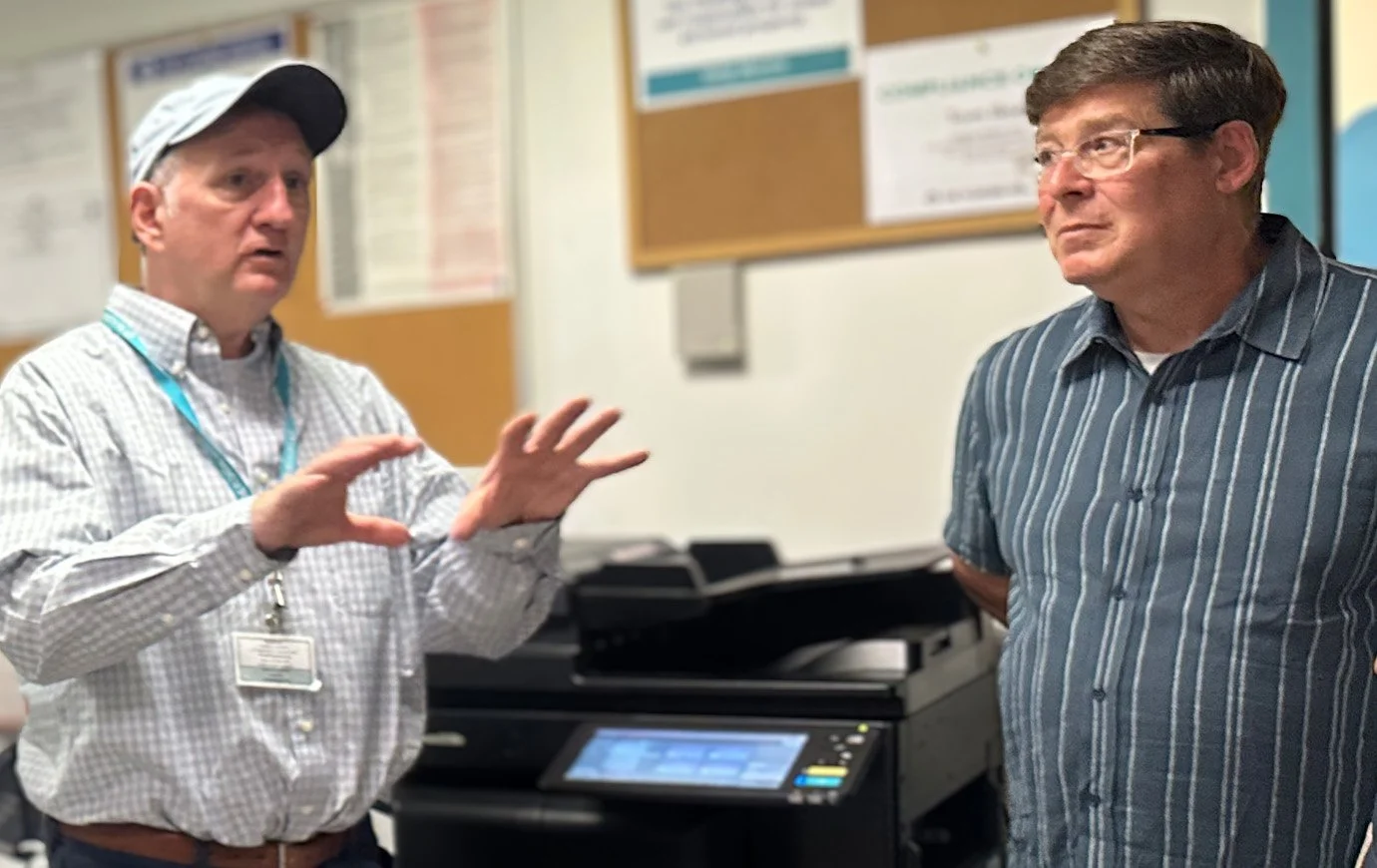
Matthew Barba, a Hospital board member, organized the September tour for his board colleagues after Romero took him to see several of the offsite clinics. Hospital Board Chair Dominick DeLorenzo and board members Carol Jackson, Carmen Munoz Medrano and Mary Sue Richardson joined him. He is planning another tour for those who missed this outing as well as The Floating Hospital Foundation Board members at the end of the month.
While Granahan took the lead that day, Romero typically serves as guide through these locations, having built relationships at these sites for decades. “I had my first Floating Hospital interview on the boat,” he recalled, by way of introduction to those present and underlining his long involvement with the organization. (After delivering care and relief services on boats since the late 19th century, The Hospital moved its ship into dry dock when it lost its mooring rights after September 11, 2001.) Barba noted how well-loved Romero is in this loose-knit community. “His relationship with everybody in all of the buildings—not just our clinic providers and staff—is striking in its warmth and affection,” he said. “He’s an institution,” Granahan added.
Rather than finding the tours intrusive to his already packed daily schedule, “I think that it is very important for individuals, agencies and organizations connected, in one way or another, to The Floating Hospital to witness, experience and see the surroundings and environments where our patients live,” said Romero. “It helps us to understand even more the critical role we play in the future of those children and parents who use our services.”
He added that while it was natural to focus on “programs like Camp Rise Up that invite young people to enjoy nature, or Candy Cane Lane, which allows children without homes to enjoy the holidays, we sometimes forget the living conditions of our clients.”
The Floating Hospital has two clinics in the Bronx. One is at the city’s PATH (Prevention Assistance and Temporary Housing) facility, an intake center for families with children and no other housing options. The other is at HELP USA’s transitional shelter at Morris Avenue, a family shelter with supportive services designed to help their residents eventually move into permanent or supportive housing. There are also clinics in Brooklyn at the Legacy Family Residence in Flatlands and Auburn Family Residence for adult families in Fort Greene as well as at Queensbridge Houses in Queens, the largest public housing complex in North America. While not offering the full array of medical services as our main clinic, these primary care satellites perform a vital function at each of the sites they occupy.
Of all our clinic locations, PATH is the most unusual, given its location in what functions as a gateway for the city’s shelters and homeless services for families and pregnant women. Granahan likened the site to a “cafeteria, where instead of walking through a line to pick up food, they’re offering a variety of services you need as a family facing the difficult realities of homelessness.”
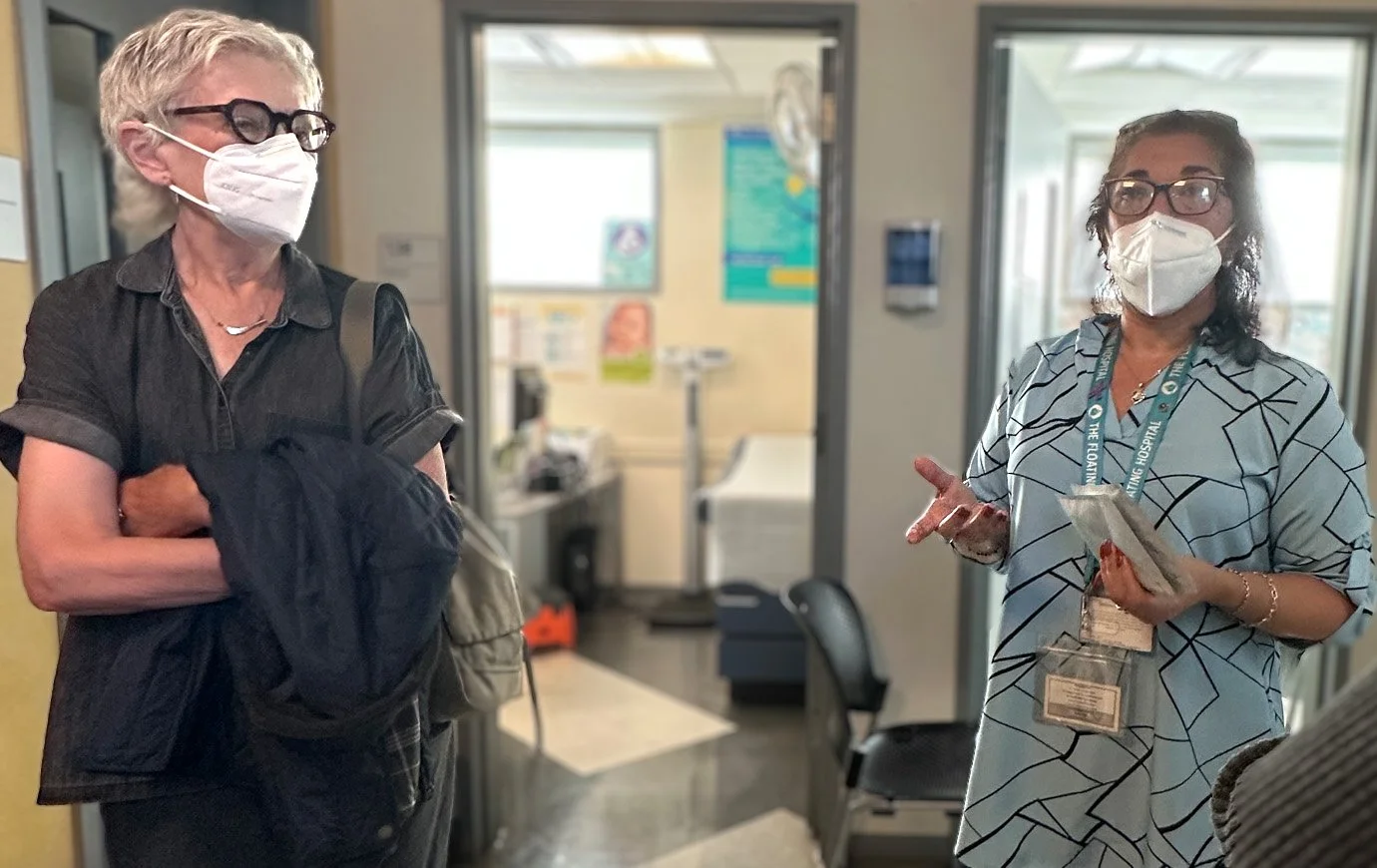
The clinic at PATH is run by Sally Scott. When we arrived, the PATH site had been locked down due to a client with a reported case of active tuberculosis. The group waited outside as the clinic and isolation areas were cleaned and were offered N95 masks to wear inside. No one turned them down. “You’re seeing firsthand the world of public health,” Granahan noted.
At PATH, applicants go through an arduous process to qualify. “The city doesn’t have enough space. They will send you anywhere, to any borough,” said Granahan. Mothers can spend hours on public transportation trying to take their children back to the same school where they originally enrolled.
Each family will be sent to our clinic once to be screened to make sure they are healthy enough for communal living. About 20 to 25 families a day are checked for lice, tested for TB and offered vaccinations for their children if they have not received them previously. Scott noted that anyone with a medical history or pregnancy will go to the clinic immediately for testing. Single women found not to be pregnant will be sent to a different facility for single females. The clinic is staffed by medical assistants and nurse practitioners as well as a health educator to discuss conditions such as asthma, diabetes and hypertension. Patients who are pregnant or have health issues that require more care are given information about where they can follow up.
In 1986, former New York State Governor Andrew Cuomo along with leaders of business and government founded an organization to provide onsite support services and, eventually, permanent affordable housing to families in need. HELP USA grew from one site in Brooklyn into 70 sites and programs across the country. Alicia Smith, a HELP Morris staffer who led the tour on that day, said a new two-building, 10-story facility has been built to replace the current site and is in the process of completion.
According to Romero, all new families in the facility are assigned a case manager, who arranges for each member to have a physical examination, which introduces the family to The Floating Hospital onsite clinic and its services. The facility is open four days a week during regular business hours. A psychologist comes three times a week during the evenings, which has made a big difference, Romero said. “During the day, parents are busy.” They may need to take their children to and from school or they are working or trying to find a job, among other activities. Providing sessions later in the day makes behavioral health care much more accessible to them.
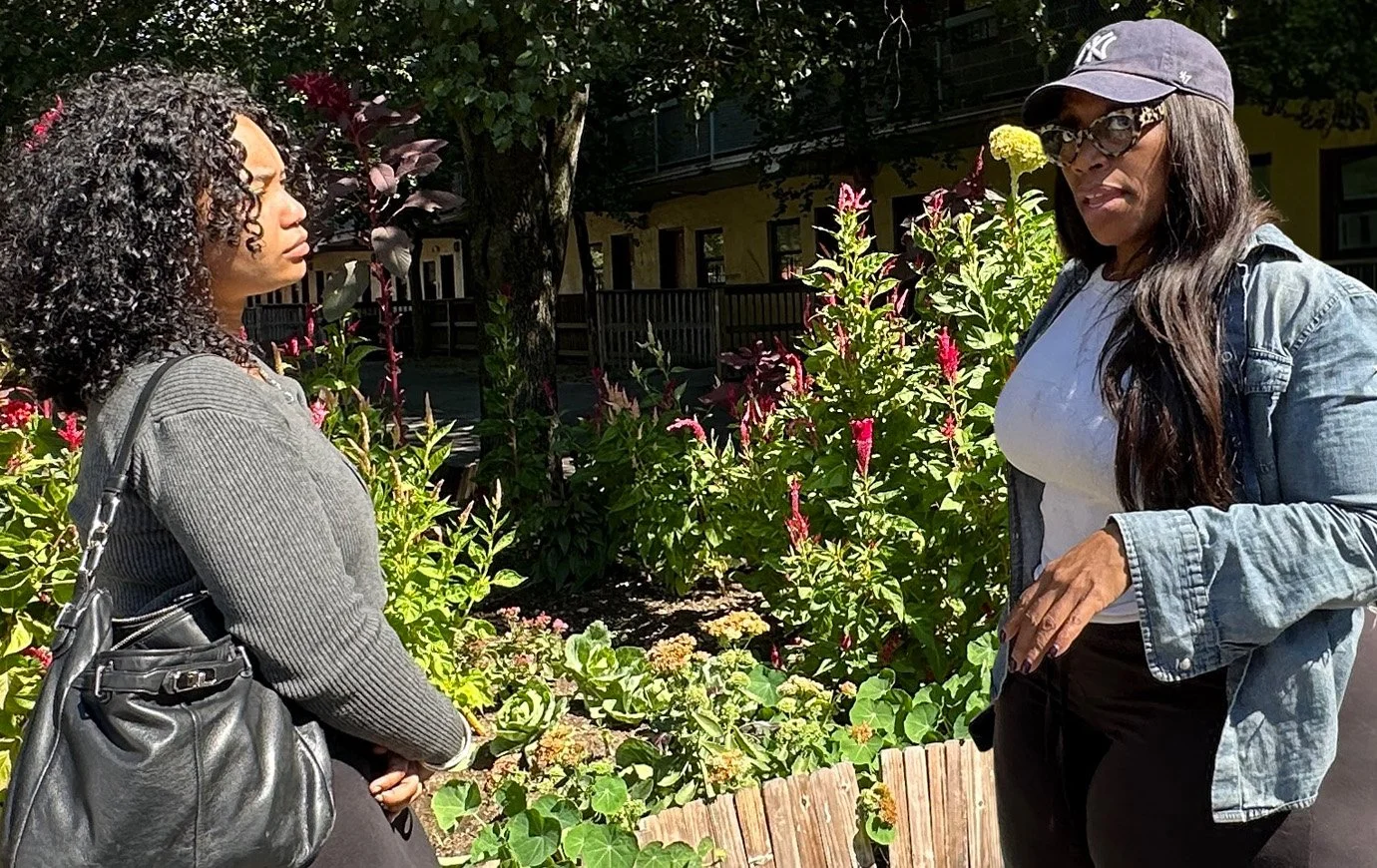
The tour included the wider facility, including a daycare center, community room and laundry facilities, outdoor space and a community garden started by one of the employees. A food pantry is on the second floor. The garden, in mid-September, was not at its peak, but was still growing tomatoes, okra, collards, squash and other vegetables as well as flowers. It added a cheery infusion of color into a landscape marked mostly by concrete, pavement and brick. It radiated warmth and hope as well as the caring of the staff for the people who transition in and out of the facility, despite the hard realities they encounter every day.
Reflecting on the value of what they had seen, DeLorenzo said “It was helpful. Now, when we talk about these sites, I can connect it to something concrete.” Noting he had been on the board for many years, he added that he had learned new things about the families we serve.
Granahan acknowledged that the monthly meeting is not the best place to offer background information to the board. “It’s why we’ll jump on any opportunity to educate. We’ll take you anywhere. We’ll take you around the clinic and have you talk to providers. That is really the only way you learn about these things. It just takes time.”
Even those in the healthcare business find “a lot of what we do interesting because it’s not replicated anywhere. Nobody else is doing this and nobody views it through the same lens that we view it, after being so immersed in families for 16 decades,” Granahan said. “Never forget that we’re not just a health center. We’re a relief agency that has a health component to it, but we’re here to help families in any way we can.”